
Explore a collection of brief summaries and high-impact articles of hidden curriculum topics
Medical Rotations

A study of 38 guides in medicine suggests their is an underlying hidden curriculum of exclusion that heightens the barrier to entry into medical school for some individuals.

While tailored for radiology residents, the advice is widely adaptable.

There are many factors that impact specialty choice, and these can vary by demographic. This article explores some of the reasons why women and underrepresented minorities may be disproportionately underrepresented in radiology.

This article explores the ways new prescribers may be influenced by the pharmaceutical industry, including script tracking and other methods. The author asserts that more trainee education is needed on this topic.

This article proposes that medical trainees tacitly learn to over-use jargon and medicalese, which limits their ability to communicate effectively with patients. This, in turn, can exacerbate health care disparities.
How To Deliver and Receive Effective Feedback

This article focus on feedback in emergency medicine clerkships, but is widely applicable to many settings in medicine and beyond. For example, attendings and trainees differ in their perceptions of feedback frequency. There are many formidable barriers to delivering (and receiving) effective feedback, but these can be overcome. Several features of effective feedback are provided. Feedback Non-evaluative, specific, bidirectional (checking for understanding) Pitfalls of feedback sandwich, other, often more effective, approaches. Not assuming attentions, focusing on the actions rather than the person.
How to Deliver and Receive Effective Feedback
This article describes key methods to deliver and receive effective feedback. In brief, effective feedback is non-evaluative, timely, specific, and bidirectional (checking for understanding). There are pitfalls of the commonly used feedback sandwich. Other pitfalls include assuming intention rather than focusing on observable actions, and much more.
How To Select a Journal for Your Manuscript

Our article explores the essential considerations for selecting a journal for publication. While this article focuses on neuroradiology journals, the general principles are broadly applicable.
How Pew Research Center Will Report on Generations Moving Forward

In 2022, the Pew Research Center announced that it will limit the use of generational labels in its reporting to specific circumstances. The article cites several reasons for the change in approach related to suboptimal research methodology in some generational-oriented studies, difficulty performing meaningful data comparing different generations at similar life stages (takes decades), heterogeneity within generations, and changing demographics. The article acknowledges there are some intergenerational trends related to environmental factors such as changes in marriage and family formation.
Are Generational Trends Overblown?

Organizational psychologist and host of the podcast WorkLife, Adam Grant, discusses generational differences at work with two guests. He starts by noting there are 5 different generations in today's workplace and then has a discusses how generational differences are vastly exaggerated. These perceptions arise from an illusion of moral decline, where people compare younger individuals to their current, instead of younger, selves. The human tendency for in-group effects and clout and control also play a role. In fact, values haven't changed much over the generations even if how we express them has. Still, generational bias can create barriers and affinity (in-groups), with members of each generation affected by, and holding, viewpoints of other generations.
Provocative NY Times Opinion Piece on Humanities in College Education and Generational Trends

A thought-provoking NY Times opinion piece entitled This is Who’s really Driving the Decline in Interest in Liberal Arts Education: Guest Essay. published in July 2025 by Dr. Jennifer Frey, the former Dean of The University of Tulsa Honors College. In the article, Dr. Frey describes her experience implementing an honors liberal arts course where the students, she says, defied common generational stereotypes. These stereotypes include lack of reading hard books, lack of resilience, and over-reliance on technology and A.I. for quick answers. Despite being popular, she says the course resources were cut by the institution. She placed the blame for the decline in interest in liberal arts education squarely on the University higher ups instead of the students. The article was met with a flurry of responses in the NY Times and Dr. Frey was fired shortly after the article was published.
Are Today's Medical Residents Different From Those in the Past?

Revolutionary Rumblings: NOS Episode 2.1: New England Journal of Medicine: Vol 390, No 5
Why We Work: NOS Episode 2.2: New England Journal of Medicine: Vol 390, No 6
Tough Love: NOS Episode 2.3: New England Journal of Medicine: Vol 390, No 7
Cardiologist and host of the NEJM podcast Not Otherwise Specified, Dr. Lisa Rosenbaum, created a season of 10 podcasts related to generational perceptions in medical training. Here, we consider the first 3 episodes. In Episode 2.1, she and guests consider the issue from the perspective of trainees, considering in-group effects and if medicine should be considered a "calling." She continues discussion with trainees and other experts in Episode 2.2, considering the perceived Gen Z value of centering life around work, shift work and patient care handoffs, tolerance for discomfort, the impact of the Covid pandemic, and more. In Episode 2.3. she and a guest explore how the treatment of current trainees with shorter work hours, more wellness days, more study days, and fear of providing honest constructive feedback may be harmful to their professional development. They also consider if there has been a loss of the joy of learning.
Mid-Career Burnout and Quiet Quitting

A thought-provoking NY Times opinion piece entitled This is Who’s really Driving the Decline in Interest in Liberal Arts Education: Guest Essay. published in July 2025 by Dr. Jennifer Frey, the former Dean of The University of Tulsa Honors College. In the article, Dr. Frey describes her experience implementing an honors liberal arts course where the students, she says, defied common generational stereotypes. These stereotypes include lack of reading hard books, lack of resilience, and over-reliance on technology and A.I. for quick answers. Despite being popular, she says the course resources were cut by the institution. She placed the blame for the decline in interest in liberal arts education squarely on the University higher ups instead of the students. The article was met with a flurry of responses in the NY Times and Dr. Frey was fired shortly after the article was published.
After Training: Is it a Leaky Pipeline or Chutes & Ladders?

According to the authors: "The structure of academia is a hierarchal, patriarchal system, and success depends on familiarity with a hidden curriculum and hidden shortcuts in what we call the game of Academic Chutes and Ladders." That is, progress is not slowly flowing but jumps forward in leaps and bounds and tumbles to the start. The authors assert that leaps forward come from informal mentorship, often favoring men, and tumbles backwards result from systemic factors that penalize parenthood, and other factors that disproportionately affect women. The authors call for improved parental leave policies and improved treatment of non-tenure/adjunct positions to improve the situation.
Is the Proliferation of Authorship Harming Medical Education?
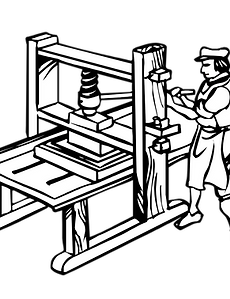
A recent opinion piece in JAMA suggests that the proliferation of lower quality abstracts amongst medical trainees may harm medical education. A high number of abstracts, presentations, and publications on applications to residency and fellowship are now often seen. In many cases, several publications will contain the same group of trainees in different author orders. It may become unclear how much any one author, especially middle authors, are truly contributing. It may be beneficial for interviewing attendings and trainees alike to reset the criteria and look for quality and degree of involvement in projects over quantity.