
Emotional Intelligence
Emotional Intelligence
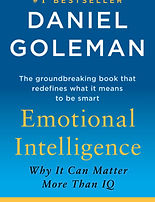
Emotional Intelligence by Daniel Goleman is a landmark book that marked a turning point in the popular understanding of emotions and emotional intelligence (EQ). Goleman asserts that, through a better understanding of emotions, we can apply the principles of EQ to better our personal and professional lives. The book expertly ties together concepts from evolution, anatomy, and physiology to describe the biological basis of emotion. It also seamlessly incorporates relevant concepts from psychoanalytic, cognitive, behavioral, and developmental psychology and explains why heavier focus on the emotional side of psychology has been a relative latecomer in the field. Overall, it is well-written and leaves the concepts easily accessible to the typical reader.
That said, the more impactful the book, the higher the standards and the scrutiny needed. Thus, this review will focus more on constructive critiques than restating the message or praise. This approach is meant to complement and enhance the reading experience and to offer a balanced, updated, true perspective. Specifically, the book may not meet some readers’ expectations of scope, may be out of date in certain areas, and some of the wording and scenarios could be off-putting to some readers. Readers without background in neuroanatomy may want to read it with a basic brain atlas in hand. Overall, it is an exceptional book but is best read with this critical context in mind.
The Primary Objective
First and foremost, this is a book about the academic basis of what EQ is and why it is important (including it can be more important than IQ), written in a way that is accessible to the public rather than as an academic text. Some readers might expect a practical guide or self-help book a focus on techniques of how to become more emotionally intelligent. While the academic background certainly helps, this is not the primary focus. If your goal is self-improvement, you will probably need to supplement the book with other resources or coaching and counseling as needed.
Overall, the book offers many general tips on a more superficial level and can serve as a background resource for a self-improvement purpose. Some of the tips discussed include:
-
Know your triggers
-
Rehearsing when not emotionally charged so responses become automatic
-
Reframing situations
-
Distraction
-
Agreeing (between couples) to take a time-out
-
Not being overly critical (wife to husband), especially ad hominem attacks
-
Understanding that wives may express emotions to underline the importance of a topic
-
Validating another’s feelings even if you disagree
-
Not suppressing feelings
-
Not acting out anger
-
Exercise (but diminishing returns if already do consistently)
-
Prayer
-
Helping others
-
Avoiding upward social comparison, making downward social comparisons
-
Applying the principals of marriage EQ to manage critical discussions to the workplace
-
Understanding the importance of emotions in early childhood development
-
Entering a flow state through focus and finding the right difficulty level of a task
In addition, there is a heavy emphasis on childhood development and on addressing major deficits rather than fine-tuning and optimizing a typical person’s emotional competence. For example, most examples are extreme such as cases of murder, abuse, or medical conditions (eating disorders, PTSD, major depression, substance abuse) or bullying. There are comparatively few examples of how a typical person can gain an incremental advantage at home or work.
What is EQ?
The book centers on EQ, so one might think it provides a crystal-clear definition, but it falls short. Instead, the concept is presented with different hierarchical aspects: self-awareness (the most fundamental), self-management, social awareness, and relationship management. Thus, it relates to the ability to understand and manage one’s own emotions and those of others.
Still, the topic seems broad and can be applied in many ways. At various points in the book, a reader may wonder if EQ is ultimately centered around:
-
What makes you popular
-
The ability to control anger
-
The 7 things that predict early success in school (confidence, curiosity, intentionality, self-control, relatedness, capacity to communicate, cooperativeness)
-
The ability to read body language and tone of voice
-
Automatic vs. intentional reactions
It seems to underly all these things. Further, a relationship to social intelligence is discussed but left a bit vague. As background, the initial definition of EQ put forth in 1990 by Salovoy and Mayer) was the “ability to monitor one’s own and other’s feelings and emotions, to discriminate among them, and to use this information to guide one’s thinking and actions.” (Salovoy, 1990). It turns out, however, that EQ is truly difficult to define and measure. Currently, the evidence on the importance of EQ in post-secondary settings is also mixed.
Is the Importance of EQ Hype?
Since the publication of Emotional Intelligence, additional data has suggested that EQ may be less independent from both IQ and personality (especially agreeableness) than earlier recognized. Some data suggests there is less impact on career success than expected too, especially jobs that are knowledge and skills – oriented rather than interpersonal-oriented. While EQ impacts early education, the data is mixed on the impact on post-secondary education.
Hierarchy in the Workplace
Goleman suggests EQ is becoming more important at work as workplace hierarchy is flattening (1990s). While there have been anti-hierarchical forces at play in recent decades and middle manager roles have blended with leadership expectations, it is important to recognize that hierarchy in the workplace is a permanent fixture, at least according to Harold Leavitt in his book Top Down. Interpersonal skills are still important for workplace performance, perhaps even more so than in the past, but the reasons may be nuanced. Also relevant, but not covered in the book, is the prospect that the modern workplace structure has become more conducive to infiltration by psychopathic ladder-climbers, at least according to Robert Hare’s book Snakes in Suits.
Some Topics Are Outdated
Much has been learned since Emotional Intelligence was published. The way EQ is conceptualized and studied has evolved. Empathy has been split into affective and cognitive components. The impact of EQ on motivation has been de-emphasized. We now recognize a replication crisis in psychology (and other) research, even if it is debated. Ideas of political correctness have evolved. Technology has made quantum leaps and teenagers now spend a great deal of time on social media. An epidemic of loneliness has become worse. There is increased attention on the troubles of young boys, who struggle to keep up with girls academically and are at high risk for loneliness and suicide. Ideological divisions between the genders have, on average, widened.
What specifically has been learned about EQ? In brief, in addition to the potential areas of hype mentioned, some authors contend that the empirical evidence for EQ was not as strong when Emotional Intelligence was first published as a reader may surmise. Since then, there have been updates in the field, including new viewpoints and scoring systems. In brief, the concept of EQ may be viewed as multifaceted and the available scoring systems still have limitations.
For example, the distinction between cognitive and affective empathy is important. For example, medical school training generally focuses more on honing cognitive empathy. Psychopaths may have cognitive empathy (sometimes used for manipulative purposes) even when they lack affective empathy. Empathy critics like Paul Bloom, author of Against Empathy, focus more on the potential limitations of affective, rather than cognitive, empathy.
Some previous beliefs have been overturned too. For example, Goleman discusses the famous “Marshmallow” experiments that began decades earlier. In brief, young children who were able to show the self-restraint to postpone a reward such as eating a marshmallow for the promise of a better reward later faired better later in life on several measures. Subsequent studies have shown that this phenomenon is complex with many different considerations. I brief, the effect diminishes once socioeconomic factors are considered and there are many confounders like the degree of trust the student had on the evaluator.
Goleman also focuses on the theory of multiple intelligences put forth by Garnder in the 1980s, describing how EQ builds off this concept. While the multiple intelligence theory called attention to the fact that many factors of learning and success may be out of the narrow scope of IQ, the strict concept of multiple intelligences is now strongly debated. Some authors even refer to multiple intelligences as a neuromyth, although Gardner contends this is a misunderstanding.
Finally, the concepts are now more widely known and less revolutionary than at the time of writing, which indicates success of the effort.
Other Critiques
Some data now suggest EQ is not as independent from IQ or personality (especially agreeableness) as the book might imply. In fact, it may have merely a small incremental impact on workplace performance, especially work that is more heavily dependent on IQ than interpersonal skills, and less impact on education than implied, with mixed results in post-secondary education.
A chapter on EQ in medicine portrays the stereotypical cold and distant doctor who has no interpersonal skills or sign of compassion whatsoever (sure this happens sometimes, but not often as depicted here). Goleman also contends that psychology doesn’t factor into the medical model, but the biopsychosocial model had long been developed. While not as dominant as the biomedical model, it is an exaggeration to say it had no place in the 1990s.
Goleman mentions that teenage boys settling disputes physically while girls have outgrown this approach and show hostility with non-physical means such as rumor-spreading and vendettas. He cites this as evidence of greater emotional maturity in girls, but an alternative viewpoint is that both stereotypical approaches are sub-optimal.
Some case examples and word choices could be interpreted as disparaging. I think it may reflect the time and the fact it was written as a popular book instead of an academic book. These depictions make it more interesting and sensationalized but could be taken the wrong way. Some of the terms used to describe individuals with various low EQ traits include: socially incompetent, bland, inept, lazy, brute, social reject, socially tone deaf, off, deficient, failure of what it means to be human, annoying lack of social graces, atrocious (versus gifted at parenting).
Goleman states that morals are founded in empathy, but are they really? Some like Paul Bloom argue that empathy often leads us astray and can lead to worse choices. What about the philosophical and ethical basis? Can’t someone without empathy still know right from wrong and choose to act in morally acceptable ways?
There has also been increased awareness of biases against, and advantages of, introversion since the book’s publication. He extorts the extrovert ideal, which could offend neurodivergent individuals who have inherent challenges reading body language and picking up social clues. Overall, the book seems to devalue introversion.
Goleman repeatedly praises popularity. At points in the book, he seems to view popularity as the epitome of high EQ. Sure, popularity helps a lot and can be a product of high EQ but consider the counterexamples and confounders. Popular kids can be mean and not everyone wants to be popular, who else can be popular? A class clown, attractive people, athletic people, doctors who hand out too many antibiotics or narcotics, teachers who are easy graders, and parents who let their kids eat too much candy. Many psychopathic dictators are popular with their followers. Many socially popular people make average colleagues or bosses.
One New Yorker article, written by a first-generation person with a ‘funny name’ offers an additional critique. Specifically, the book ignores the social forces that underly the extreme examples used in the book. Many of these were of minorities or in disadvantaged areas, era of broader social change. The author also contends that the workplace shouldn’t intrude so much on our private inner emotional lives.
References
Barchard, K.A., (2003). Does emotional intelligence assist in the prediction of academic success? Educ. Psychol. Measure, Vol 63, pp. 840-858.
O’Connor PJ et al. The Measurement of Emotional Intelligence: A Critical Review of the Literature and Recommendations for Researchers and Practitioners. Front Psychol 2019;10:1116
Joseph, D. L., Jin, J., Newman, D. A., & O’Boyle, E. H. (2015). Why does self-reported emotional intelligence predict job performance? A meta-analytic investigation of mixed EI. Journal of Applied Psychology, 100(2), 298–342.
Fiori M, et al. Emotional intelligence as an ability: theory, challenges, and new directions. 2018; Emotional Intelligence in Education. The Springer Series on Human Exceptionality. Springer, Cham. https://doi.org/10.1007/978-3-319-90633-1_2
Salovey, P., & Mayer, J. (1990). Emotional Intelligence. Imagination, Cognition, and Personality, 9, 185–211.
Emre M. The repressive politics of emotional intelligence. The New Yorker April 12, 2021.